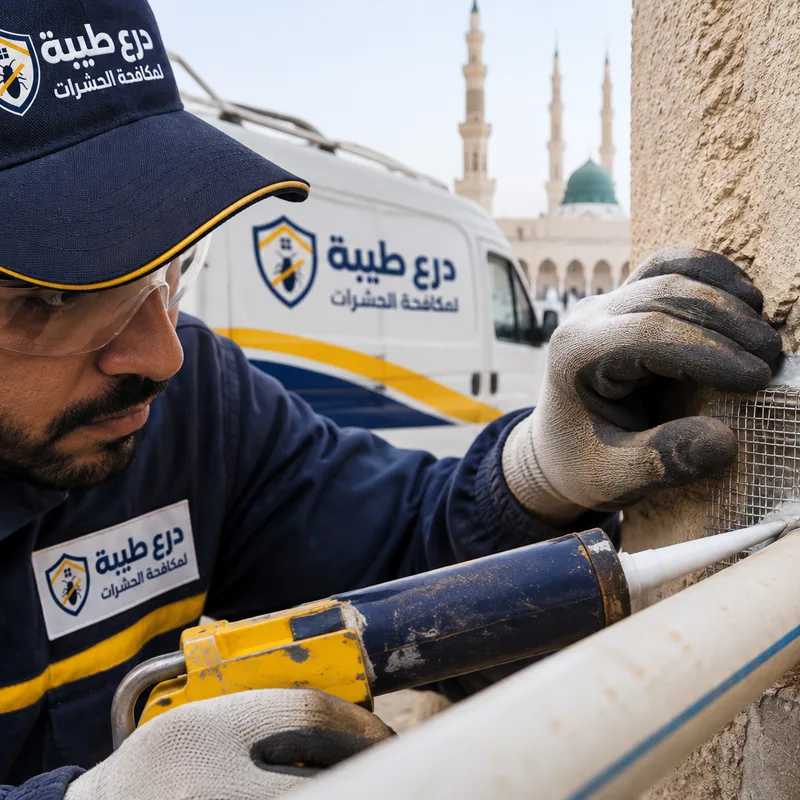
Species-led inspection
We look for rat versus mouse signs (dropping size, rub marks, gnawing, burrows, tracks) and locate travel routes so control is placed where it actually works.
Serving Madinah, Al Madinah Province & surrounding areas
Mon–Fri 8am–6pm · Sat 9am–2pm
Rodent control in Madinah
Inspection-led rat and mouse control for homes, shops, and facilities in Madinah, with safe treatment choices and practical prevention to keep rodents from returning.
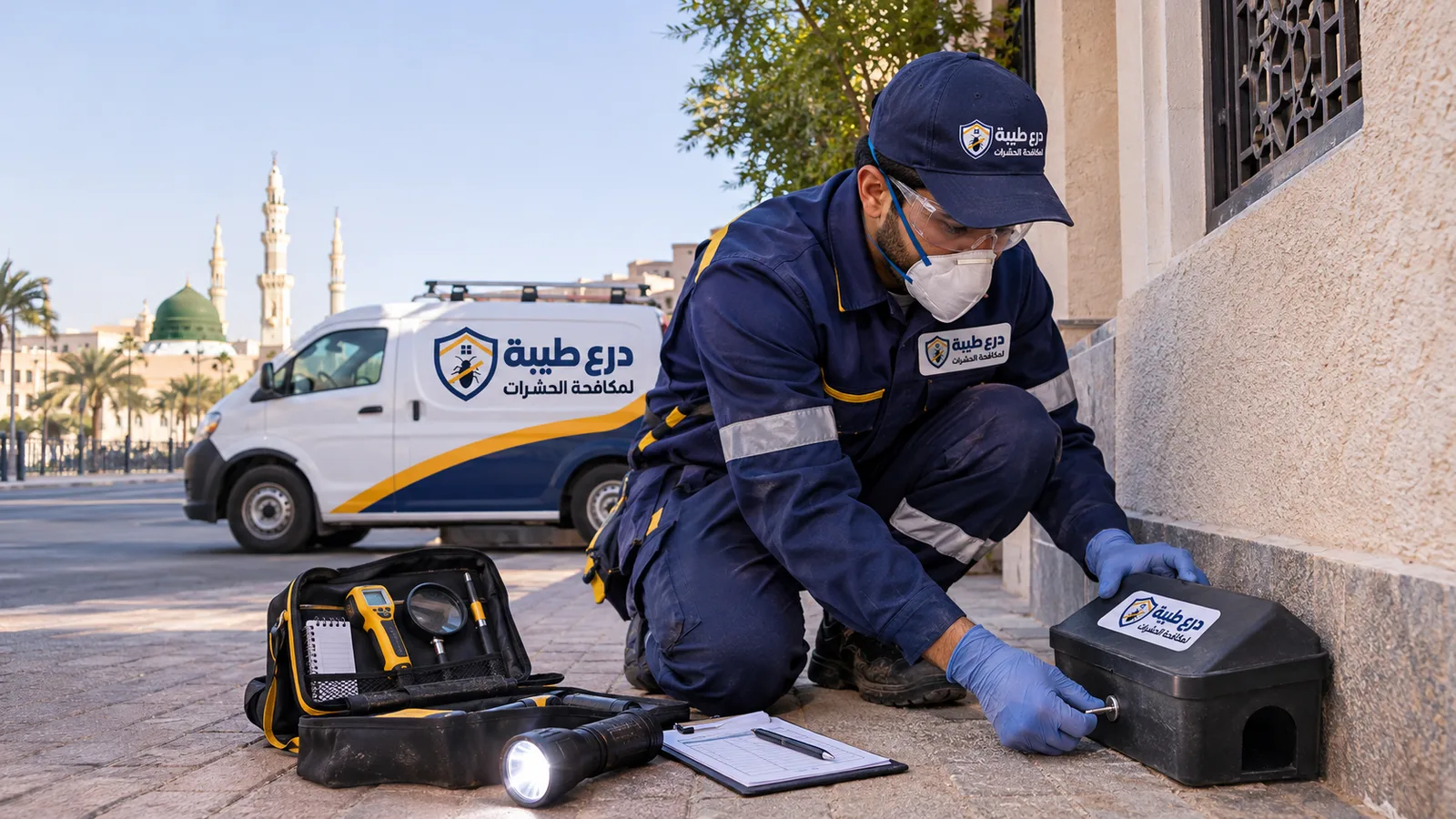
Stop the current activity and reduce the conditions that let rats and mice return.
Scheduled for homes and businesses in Madinah
Inspection-led control
Rodents do not stay in one place. A small entry gap, an unsealed drain opening, or an attractive food source can turn into nightly activity fast. Our Rodent Control work in Madinah focuses on two things: stopping the current problem (Rodent Extermination when needed) and reducing the conditions that let rats or mice re-establish.
درع طيبة لمكافحة الحشرات works as a professional pest control English company in Madinah with a straightforward approach: identify the species and travel routes, map entry points, choose the correct control method for the setting, then close the gaps and improve sanitation and storage so the pressure drops over time. In many Madinah buildings, rodents follow predictable lines such as perimeter walls, roof edges, service conduits, and areas around storerooms and waste handling.
If you are seeing droppings, gnaw marks, scratching in ceilings, or repeated sightings around kitchens, store rooms, parking levels, or gardens, the best next step is an on-site inspection. The plan changes depending on whether the issue is active nesting, a recurring entry problem, or a neighboring pressure source.
We look for rat versus mouse signs (dropping size, rub marks, gnawing, burrows, tracks) and locate travel routes so control is placed where it actually works.
We use strategic trapping and, when appropriate, secured bait stations in protected positions along runways and exterior perimeters to reduce risk and improve results.
You get clear findings on likely entrances such as door thresholds, pipe penetrations, ventilation openings, and damaged screens, with practical sealing priorities.
For kitchens, clinics, and family homes, we prioritize mechanical control and low-exposure tactics, and we explain where any rodenticide can and cannot be used.
Rodent activity can fluctuate. We recommend follow-up visits when signs indicate ongoing pressure, and we adjust placements based on what monitoring shows.
For businesses, we can outline device locations, observations, and recommendations so you can support internal audits and hygiene routines.
Control and exclusion
Effective Rodent Extermination is rarely one product. It is a system: remove access, reduce food and water, and apply control where rodents travel.
Common reasons rat or mouse jobs fail are also simple: traps placed off the runway, bait left unsecured, entry points ignored, and clutter left against walls. Mice can squeeze through very small gaps, and rats will keep using a known route if it stays open. That is why our first visit focuses on inspection details you can act on.
For homes, we often focus on kitchens, storage areas, roof spaces, and yard walls where rodents move unseen. For businesses, we pay close attention to delivery doors, waste areas, food storage, and any utility penetrations.
If other pests are part of the broader issue in your building, it can help to address them in parallel. For example, if insects are drawing rodents to food sources, our general pest control service in Madinah can be scheduled alongside the rodent plan without mixing treatment areas in unsafe ways.
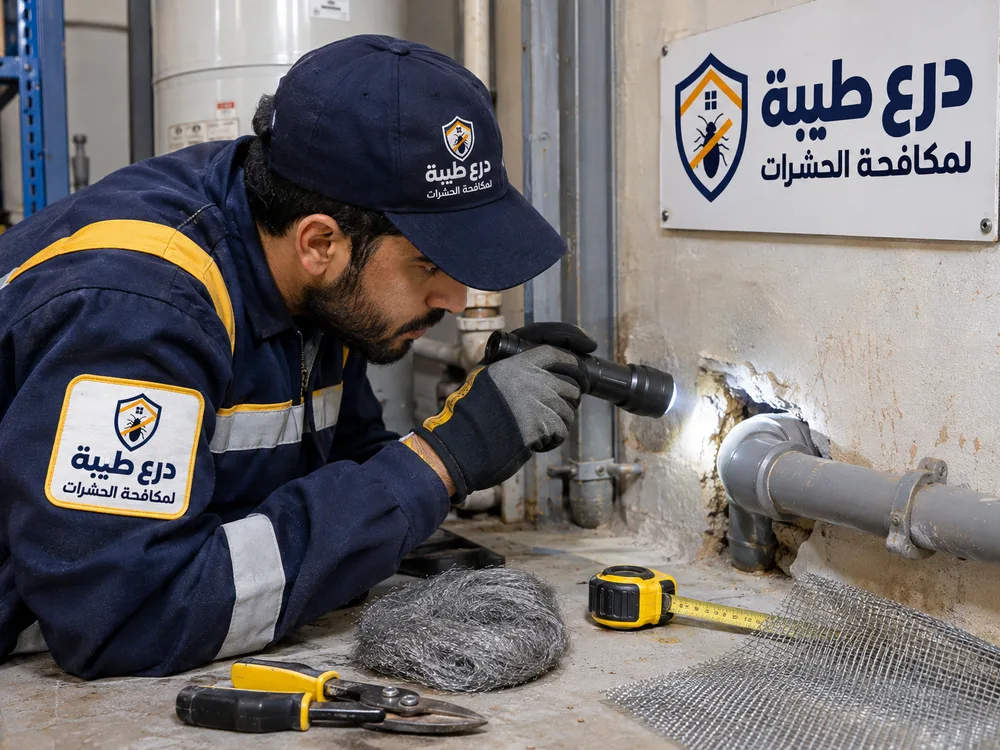
Steps of the visit
We check likely hotspots, identify runways and nesting signs, and note risk zones (children, pets, food areas, staff access) so the plan fits the site.
We place devices along confirmed travel lines, not in the middle of open areas. For Mouse Control, this often means tighter spacing and more placements; for Rat Control, it often means perimeter-first control.
We point out the highest-impact sealing locations first, such as under doors, around utility lines, and ventilation openings. Closing even a few key points can reduce repeat activity dramatically.
We give practical steps like relocating stored cartons off the floor, reducing wall-to-stock clutter, improving bin management, and removing outdoor food sources that keep pressure high.
We re-check devices, look for fresh signs, and adapt the approach based on what is happening on your property, including changes after sealing work or cleaning routines.
Planning and pricing
Rodent Control in Madinah typically ranges from about SAR 250 to SAR 900+ for a basic home visit with inspection and initial trapping or secured stations, while larger villas, repeated follow-ups, or commercial sites with multiple zones often run SAR 900 to SAR 2,500+ depending on scope.
Final pricing depends on the level of activity, property size and layout, the number of devices required, access (ceilings, roof areas, store rooms), and whether exclusion guidance is simple or involves many entry points to address. The exact cost is confirmed after the on-site inspection and a clear plan for the next visits, if needed.
Check AvailabilityPractical answers
In many cases, you can see a drop in activity within the first few days after correct trap and station placement, but full control often takes one to two follow-up visits because rodents change routes and new signs need adjustment. The timeline depends on entry points, food availability, and whether the problem is localized or recurring from outside pressure.
We use rodenticides only when they are appropriate for the site, and only in secured, tamper-resistant stations placed in controlled locations. For many homes and sensitive areas (kitchens, clinics, places with children), we often start with mechanical control like snap traps or multi-catch trapping and focus heavily on exclusion and sanitation.
Clear clutter along walls, empty and wipe down food prep and storage areas, move cartons off the floor, and secure all food in sealed containers. If possible, avoid moving traps or stations after placement because rodents follow established runways and consistent positioning improves capture and monitoring accuracy.
Recurring Mouse Control issues usually mean there is still an entry route or an ongoing attractant. Mice can enter through very small gaps around doors, pipe penetrations, and damaged screens, and they can live off tiny food sources such as crumbs, pet food, or uncovered bins. Long-term control typically requires a short cycle of monitoring plus basic exclusion work.
Yes. Commercial rodent work is usually built around zone-based inspection (receiving, storage, waste area, perimeter), documented placements, and a realistic follow-up schedule. In multi-tenant sites, results improve when shared areas like waste rooms and service corridors follow the same storage and cleaning standards.
It can be, when the methods match the environment. We choose placements that reduce contact risk, use locked bait stations when baiting is justified, and can rely on enclosed traps where appropriate. During the inspection we identify risk points in your home or facility and explain any precautions before we start.
Tell us what you are seeing and where it is happening, and we will arrange an inspection and a clear plan for rat or mouse control, including prevention steps that fit your property.