
Monitoring-first control
We use monitoring points and trend notes to find where activity is starting, then treat those areas directly. That keeps the program focused and easier to manage over time.
Serving Madinah, Al Madinah Province & surrounding areas
Mon–Fri 8am–6pm · Sat 9am–2pm
Warehouse pest control in Madinah
Protect stored goods, reduce damage and contamination risk, and keep audit-ready records with a plan built for racking, loading bays, and high-traffic logistics areas.

Operationally focused protection
Warehouse Pest Control is about more than a quick spray. Warehouses in Madinah handle constant receiving and dispatch, mixed packaging materials, and plenty of hiding places around pallets, racking uprights, dock levelers, and floor drains. If pests get established, they can damage stock, trigger customer complaints, and create compliance problems.
At درع طيبة لمكافحة الحشرات, we build targeted programs for storage and distribution sites based on how your warehouse actually works: your traffic flow, the types of goods you hold, the way shipments arrive, and the pressure points around doors and dock areas. We focus on practical control you can measure: inspections, monitoring, treatment where it makes sense, and clear reporting your team can file.
If you are comparing providers, our work as a pest control English company throughout Madinah is built around clear scopes and documented service visits, so your operations team knows what was found, what was done, and what changes reduce re-infestation risk.
Inspection and treatment details
A strong warehouse program starts with a detailed site walk. We map the building and identify where pests can enter, feed, and nest.
Common inspection points include:
From that baseline, we set up a routine that matches your risk level and operating hours. Treatments are planned to minimize disruption, with a focus on the smallest effective application in the right locations rather than broad, unnecessary chemical use.
Check Availability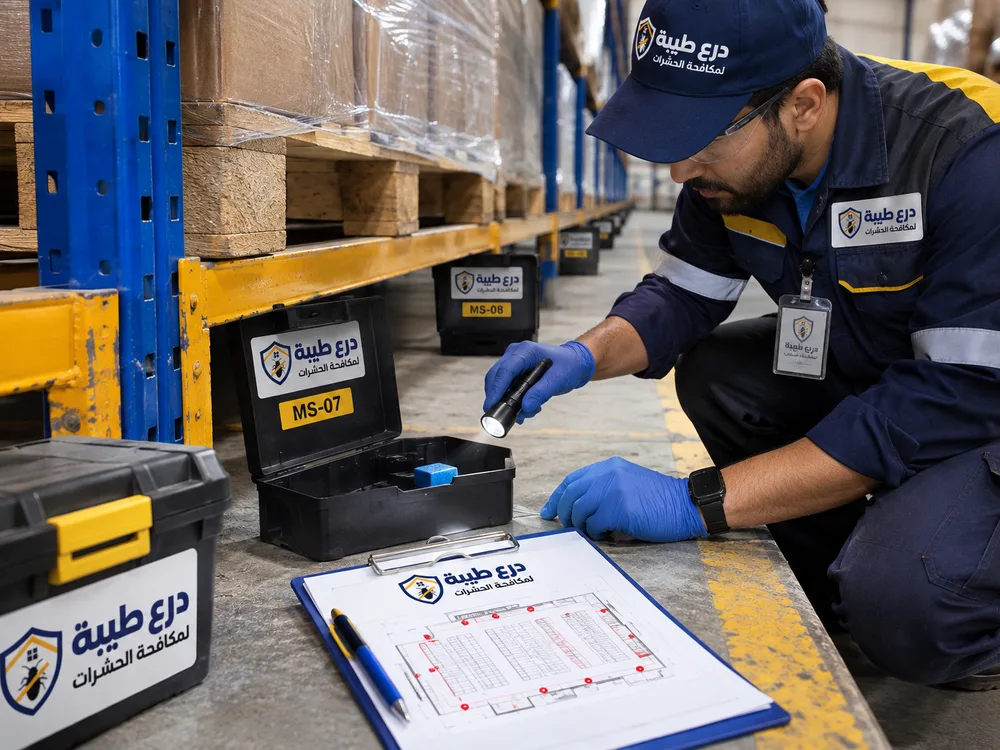
Warehouse program components
We use monitoring points and trend notes to find where activity is starting, then treat those areas directly. That keeps the program focused and easier to manage over time.
Warehouses run on tight dispatch windows. We plan service visits around your receiving, picking, and forklift traffic so work happens safely and with minimal downtime.
Each visit is recorded with findings, actions taken, and recommendations. This supports internal reviews and customer or third-party audit requirements.
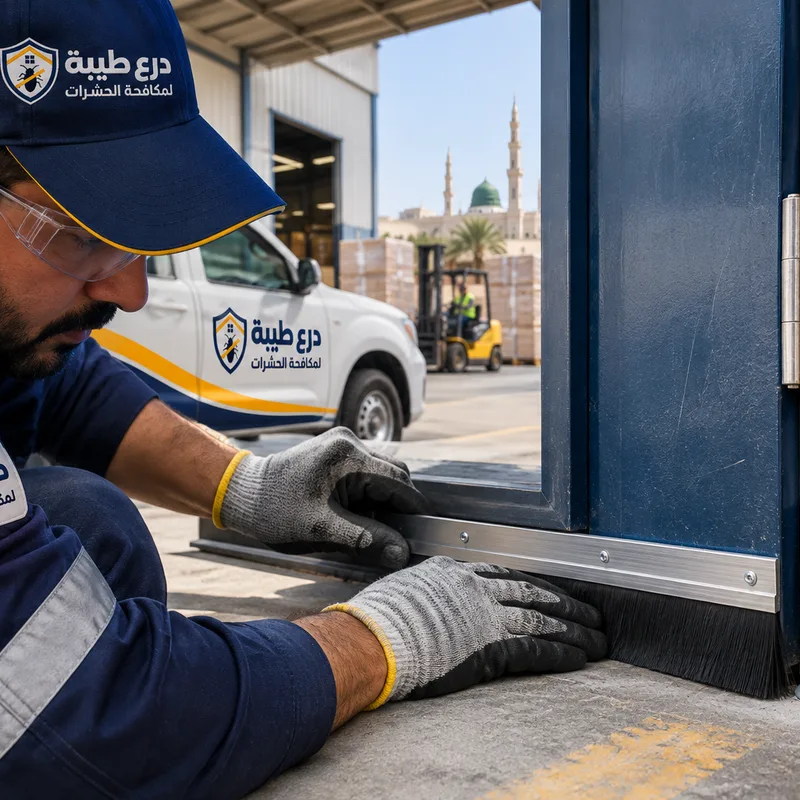
Chemical control alone is rarely enough in logistics sites. We flag entry points like door gaps, damaged seals, wall penetrations, and storage practices that keep pests active.
We prioritize control methods that reduce the chance of product contamination and packaging damage, with special care around stored food, paper goods, and sensitive inventory.
Steps of the service
We walk the warehouse with your point of contact, identify hotspots such as docks, waste areas, and low-rotation racks, and note access constraints like restricted zones and shift patterns.
We place monitoring devices where they can be checked consistently without interfering with operations, then document locations so your team knows what should remain in place.
We treat based on evidence and pest type, selecting methods suitable for warehouses, including residual treatments in appropriate zones, crack-and-crevice work, and non-chemical options where needed.
Warehouse Fumigation is used when there is a confirmed need for a full-space or commodity-focused approach, such as certain stored-product pest situations. We explain scope, preparation, safety controls, and re-entry requirements before any work starts.
We provide clear service notes and practical recommendations for housekeeping, storage rotation, and sealing points, then adjust the plan based on monitoring results and seasonal pressure.
Planning and pricing
Warehouse pest control in Madinah typically ranges from about SAR 600 to SAR 2,500+ per visit for small to mid-size facilities, while larger warehouses and higher-risk storage can run SAR 3,000 to SAR 8,000+ depending on scope. Ongoing contracts are often priced monthly based on visit frequency and monitoring requirements.
Final pricing depends on total area, number of loading bays, racking density, pest type—including Warehouse Rodent Control needs—operating hours, and any required prep or restricted-access zones. The exact cost is confirmed after an on-site inspection and a written scope.
Check AvailabilityOn-site standards
Practical answers
For active sightings or evidence like droppings, gnaw marks, or damaged cartons, we prioritize an inspection as soon as scheduling allows and then move to targeted treatment based on what we confirm on site. Warehouses often have multiple entry points, so the first visit focuses on locating the activity zone, setting monitoring, and reducing immediate risk around stock and dock areas.
Warehouses commonly deal with rodents, cockroaches, ants, and stored-product pests depending on what is stored and how goods arrive. Control is based on inspection evidence, then a combination of monitoring, proofing recommendations, sanitation guidance, and targeted treatment in cracks, voids, and perimeter zones where activity is actually occurring.
Warehouse Rodent Control typically includes a full perimeter and interior inspection, placement and routine checking of monitoring points, and a plan to reduce entry at doors, dock edges, and penetrations. We also document where activity is found so your team can coordinate corrective actions like improving door sealing, managing waste timing, and reducing exterior harborage near walls.
Warehouse Fumigation is usually considered when there is a confirmed stored-product pest problem that cannot be controlled with localized measures, or when a full-space approach is required by your operations plan. The right choice depends on the pest, the commodity, the building volume, and safety requirements, and it always requires planning for preparation, exclusion zones, and controlled re-entry.
Not always. Many warehouse treatments can be scheduled around receiving and dispatch so key areas remain accessible, and work is limited to targeted zones like perimeters, cracks, and specific hotspots. If any method requires temporary restrictions for safety, we explain the affected areas and timing in advance so you can plan staffing and movement.
Before the first visit, it helps to share your operating hours, a simple floor plan if available, any recent pest sightings with locations, and any rules for sensitive areas. If there are specific problem points, such as a particular dock door that does not seal well or a low-rotation rack zone, flag those so the inspection can start where risk is highest.
Send the basics about your facility size, what you store, and where you are seeing activity. We will schedule an inspection in Madinah and provide a clear scope for monitoring, treatment, and reporting that fits your operations.